
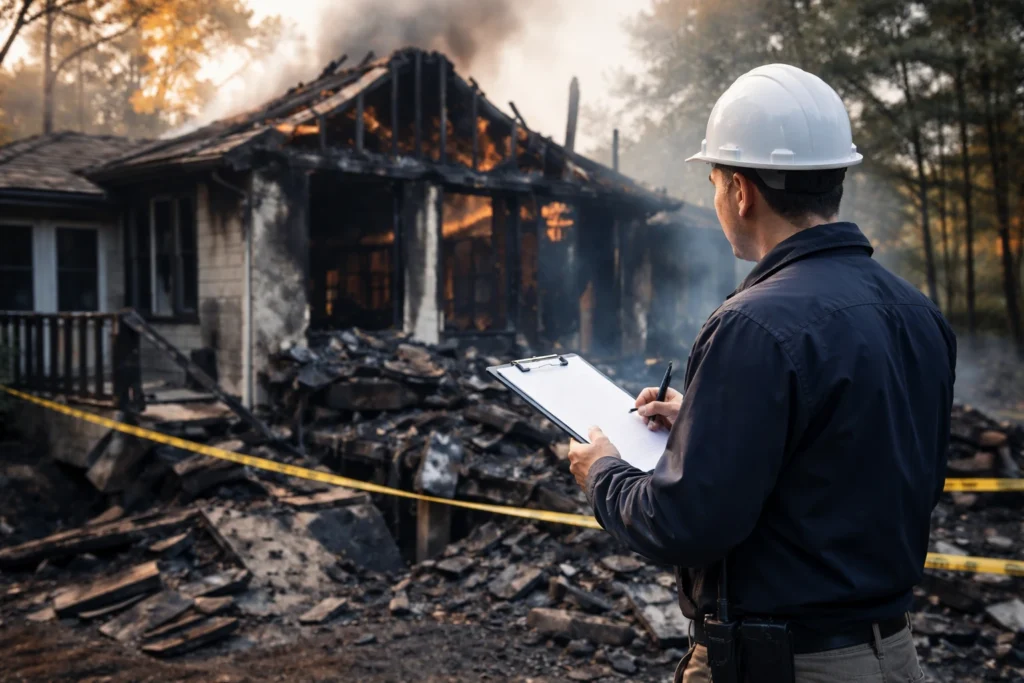
A fire changes everything in minutes. Walls blackened. Roof compromised. Memories reduced to ash. And almost immediately, you’re expected to navigate insurance paperwork like nothing happened. This is where fire insurance public adjusters step in — and where the outcome of your financial recovery can shift dramatically.
After a fire, most property owners assume their insurance company will simply “take care of it.” Sometimes they do. Often, it’s more complicated. Estimates miss damage. Smoke contamination gets minimized. Depreciation eats into payouts. Deadlines creep up. And suddenly, what looked like full coverage feels anything but.
Let’s break this down clearly and practically. Because if you’re dealing with a fire loss, you need clarity — not confusion.
What Is a Fire Insurance Public Adjuster?
A fire insurance public adjuster is a licensed professional who represents you, the policyholder, not the insurance company.
That distinction matters.
There are three types of adjusters involved in most claims:
| Type of Adjuster | Who They Work For | Who They Protect |
| Company Adjuster | Insurance carrier | The insurance company |
| Independent Adjuster | Hired by carrier | The insurance company |
| Public Adjuster | You | The policyholder |
Fire insurance public adjusters are licensed in Texas through the Texas Department of Insurance. They are paid on a contingency fee basis, meaning they receive a percentage of the settlement they help secure. No upfront fees. No hourly billing.
Their role is simple in theory: document the full scope of fire damage and negotiate for a fair settlement.
In practice? It’s much more involved.
When Should You Hire a Fire Insurance Public Adjuster?
Immediately is often best. But not always necessary.
You should seriously consider hiring a fire insurance public adjuster if:
- The property suffered major structural damage
- The claim involves smoke contamination throughout the home
- Your insurance estimate seems low
- The claim is delayed or partially denied
- It’s a commercial property loss
- You’re overwhelmed and unsure how to document contents
Fire claims are rarely straightforward. Even “partial” fire damage often includes:
- Hidden structural compromise
- Electrical system damage
- HVAC contamination
- Water damage from firefighting efforts
The earlier professional representation enters the process, the more control you retain.
What Fire Insurance Public Adjusters Actually Do
This is where the real value shows up.
1. Comprehensive Damage Assessment
A fire doesn’t just burn what you see.
Fire insurance public adjusters evaluate:
- Structural framing
- Roof integrity
- Smoke migration patterns
- Soot penetration into porous materials
- HVAC contamination
- Electrical wiring damage
- Code upgrade requirements
Smoke alone can require full replacement of insulation, ductwork, and cabinetry — even when flames never touched those areas.
Insurance estimates often focus on visible burn damage. Public adjusters look deeper.
2. Policy Review — Line by Line
Your policy is a contract. But it’s also complex.
Fire insurance public adjusters analyze:
- Coverage A: Dwelling
- Coverage B: Other Structures
- Coverage C: Contents
- Additional Living Expenses (ALE)
- Ordinance or Law Coverage
- Business Interruption (for commercial claims)
Many homeowners never realize they have code upgrade coverage. Or extended replacement cost coverage. Or debris removal allowances beyond the main limit.
Those line items matter.
3. Detailed Claim Documentation
Documentation wins claims. Period.
Public adjusters create:
- Detailed Xactimate estimates
- Room-by-room breakdowns
- Line-item cost analyses
- Depreciation review reports
- Personal property inventories
Contents documentation alone can make or break a claim. It’s not enough to say “living room furniture.” You need brand names, purchase dates, materials, and estimated replacement values.
That’s tedious. It’s time-consuming. And it’s where many claims get underpaid.
4. Negotiation and Dispute Handling
Insurance companies negotiate every day. Most policyholders do not.
Fire insurance public adjusters:
- Present formal proof of loss
- Challenge undervalued estimates
- Dispute improper depreciation
- Address missed code upgrades
- Handle re-inspections
- Push back on delay tactics
This levels the playing field.
Common Fire Claim Mistakes Property Owners Make
The first offer feels like relief. But it’s rarely the final number.
Here are mistakes that cost property owners thousands:
- Accepting the first settlement without review
- Failing to document smoke damage
- Throwing away damaged items before photographing
- Missing deadlines for proof of loss
- Signing partial releases too early
- Underestimating debris removal costs
Fire claims are complex. A rushed decision can lock in a lower payout permanently.
Understanding the Full Scope of Fire Damage
Fire damage isn’t just flames. It spreads through systems.
Here’s what often gets overlooked:
Direct Flame Damage
Obvious structural destruction.
Smoke and Soot Contamination
Acidic residue that corrodes surfaces over time.
Water Damage
Fire suppression soaks framing, drywall, and flooring.
Electrical System Damage
Heat compromises wiring insulation.
HVAC Contamination
Smoke travels through duct systems.
Structural Instability
Heat weakens framing members.
Code Upgrade Requirements
Local building codes may require upgrades during rebuild.
Each category carries separate costs. Fire insurance public adjusters account for all of them.
Residential vs Commercial Fire Claims
There’s a big difference.
Residential Fire Claims
- Rebuild costs based on current construction pricing
- Temporary housing expenses
- Full contents inventory
- Code upgrades
Commercial Fire Claims
- Business interruption calculations
- Lost revenue projections
- Equipment replacement
- Payroll continuation
- Inventory loss accounting
Business interruption alone can involve forensic accounting.
Commercial losses demand experienced fire insurance public adjusters familiar with financial documentation, not just structural damage.
How Fire Insurance Public Adjusters Maximize Settlements
Let’s talk strategy.
Insurance estimates often include:
- Broad repair categories
- Conservative material pricing
- Heavy depreciation
- Minimal code upgrade allocation
Public adjusters challenge those.
Replacement Cost vs Actual Cash Value
Insurance companies often apply steep depreciation.
Public adjusters:
- Re-evaluate lifespan assumptions
- Argue for proper condition ratings
- Document maintenance history
Material Matching
If half your roof is damaged, can they replace just that section? Sometimes no — due to matching laws or availability.
That difference can mean thousands.
Hidden Line Items
Commonly missed:
- Smoke sealing primers
- Duct cleaning or replacement
- Insulation replacement
- Debris hauling
- Permit fees
- Engineering reports
A thorough estimate is detailed. Not vague.
Fire Claim Timeline: Where Representation Matters
- Emergency Response
- Board-up and mitigation
- Initial Inspection
- Insurance adjuster visit
- Damage Estimating
- Carrier prepares initial scope
- Proof of Loss Submission
- Formal documentation
- Negotiation Phase
- Estimate revisions
- Settlement Agreement
- Payment issued
- Rebuild Phase
Fire insurance public adjusters typically enter at stages 2–4 and remain through settlement.
The earlier they’re involved, the more control over documentation.
Texas-Specific Considerations
Texas has unique regulations.
The Texas Prompt Payment of Claims Act sets timelines insurers must follow:
- 15 days to acknowledge claim
- 15 business days to accept or reject after receiving documents
- 5 business days to pay after acceptance
Delays beyond these timelines can trigger penalties.
In Weatherford and Parker County, rebuilding costs have risen significantly in recent years. Labor shortages and material pricing fluctuations impact replacement costs. Underestimating construction pricing is common.
Fire insurance public adjusters familiar with local pricing trends can adjust estimates accordingly.
How Much Does a Fire Insurance Public Adjuster Cost?
Most work on contingency — typically a percentage of the final settlement.
No upfront cost.
Consider this simplified example:
| Scenario | Initial Offer | Final Settlement | Difference |
| Without Representation | $185,000 | $185,000 | — |
| With Public Adjuster | $185,000 | $265,000 | +$80,000 |
Even after fees, many policyholders net significantly more.
The key question isn’t cost. It’s value.
Signs Your Fire Claim May Be Underpaid
Watch for these warning signs:
- Estimate is far below contractor bids
- Excessive depreciation applied
- Smoke damage minimized
- Code upgrades excluded
- Repeated inspection delays
- Adjuster turnover
If something feels off, it probably is.
Choosing the Right Fire Insurance Public Adjuster in Weatherford
Not all adjusters specialize in fire losses.
Look for:
- Texas licensing verification
- Experience specifically with fire claims
- Both residential and commercial expertise
- Transparent contingency agreement
- Local construction pricing knowledge
- Strong documentation process
Ask direct questions. Request examples of prior fire claim recoveries.
Professional representation should feel organized. Not rushed.
Final Thoughts: Protecting Your Financial Recovery
A fire doesn’t just damage property. It disrupts stability. It shakes routines. And it forces decisions under pressure.
Insurance policies are contracts. But they are also negotiations.
Fire insurance public adjusters exist for one reason: to ensure policyholders receive full and fair settlements under their policies. They document thoroughly. They negotiate assertively. And they understand construction pricing, policy language, and claim strategy.
And they bring structure to chaos.
If you’re facing a fire loss in Weatherford or surrounding areas, professional representation can make the difference between rebuilding properly and rebuilding under financial strain.
You paid for coverage. Make sure it works for you.
Because recovery isn’t just about repairing walls. It’s about restoring your footing — and that deserves careful attention.